

Aviation-focused development
Designed around flight deck reality — operational context, time pressure and the behaviours that hold under load.
Pilot & Trainer Development
Powered by Resilient Pilot
RPAP supports pilots, trainers and aviation organisations through structured resilience coaching and professional development pathways.
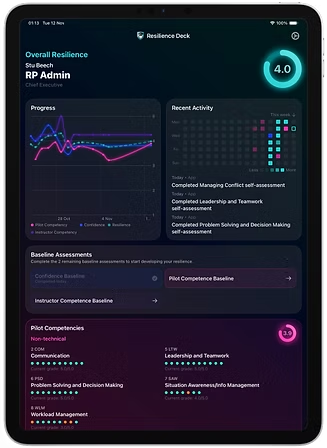
About
Resilient Programs Asia Pacific provides aviation-focused education, resilience coaching and behavioural competency development for pilots, trainers and aviation organisations.
RPAP is designed to help close the gap between identifying performance development needs and building the behaviours, confidence and capability required to improve.
Designed around flight deck reality — operational context, time pressure and the behaviours that hold under load.
Structured support that translates observed performance into the behaviours and decisions that change it.
A development setting separated from assessment — built for honest practice, reflection and growth.
The problem with recurrent-only training
Resilience and competency aren’t sustained by recurrent training alone. Between events, performance decays, and nothing fills that gap.
Recurrent Training
Resilience peaks
What are your pilots doing in this gap?
Resilience decays. Personal pressures accumulate. Observable behaviour fluency fades. The development cycle stalls.
Recurrent Training
6 months later
RPAP fills this gap
Structured development support between recurrent training events.
The concrete offer
RPAP’s trainer development program supports the shift from tell/task based questioning to ask/coaching style questioning — with proven results for the training environment.
For your instructors & evaluators (IE’s)
For your pilots
Pathway 01
For trainers/IE’s, organisations build stronger coaching aligned capability.
This pathway supports trainers/IEs who need to move beyond identifying performance gaps and toward consistent behavioural coaching and development.
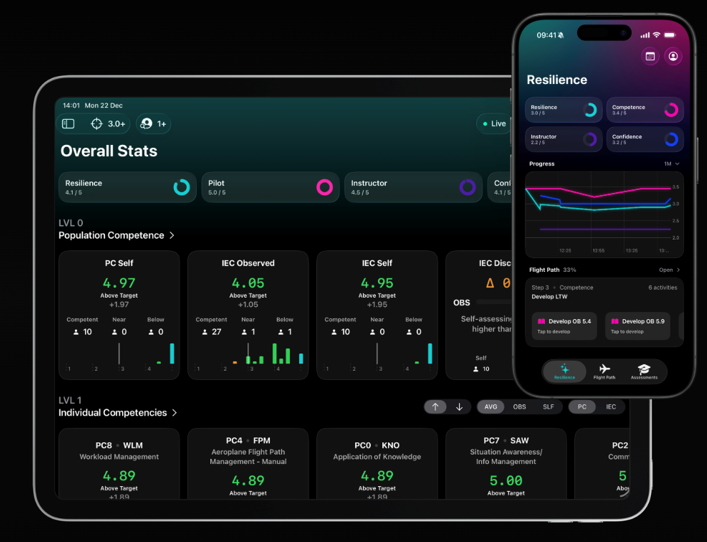
Who this is for
What we deliver
A diagnostic
Before exploring RPAP Trainer Development, these questions are worth pausing on.
Outcomes
Your EBT context
Build behavioural coaching capability before large infrastructure investment.
Unlock stronger return on existing EBT investment through instructor coaching standardisation.
Pathway 02
For pilots building confidence, competence and resilience across their professional journey.
This pathway may support pilots preparing for command, transitioning roles, rebuilding confidence, maintaining operational sharpness or seeking ongoing professional development.
Who this is for
Our structured no-jeopardy development environment strengthens behavioural performance and operational confidence. RPAP supports pilots who are:
The delivery model
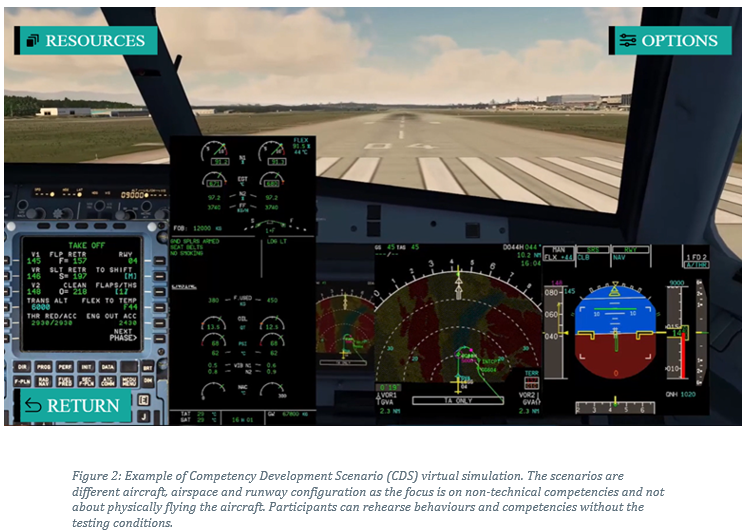
Every RPAP virtual scenario based training (vSBT) session follows a structured, evidence based format. Sessions are virtual, low overhead and designed to create maximum behavioural development per hour.
Lower fidelity. Higher development return. vSBT removes the technical overhead of full-sim training so instructors and pilots can focus entirely on the behavioural competencies that EBT is designed to develop.
The framework
RPAP uses a Knowledge, Skill and Attitude framework to explore what sits behind observable behaviours to facilitate development. RPAP are not reinventing aviation training — simply connecting the Observable Behaviour frameworks regulators have already defined to the coaching culture operators now need.
Does the pilot understand why?
Knowledge focuses on the conceptual understanding required for confident decisions, clear communication and operational judgement.
Can the pilot execute under pressure?
Skill focuses on repeatable performance, practical application and the ability to act effectively in realistic operational contexts.
Will the pilot choose to apply it consistently?
Attitude focuses on mindset, motivation, confidence and the behavioural choices that influence consistent performance.
Attitude accounts for approximately 80% of observable behavioural performance. Knowledge and Skill combine for the remaining 20%.
Most training systems invest heavily in Knowledge and Skill. RPAP develops the Attitude layer — the 80% that determines whether learning transfers to the operational environment.
A Human Factors and Non-Technical Skills program for Part 121/135 operators — delivered online, written into your exposition, and built to meet CASA AC 119-12 as an Acceptable Means of Compliance.
From 1 December 2026, every Part 119 operator needs a structured HF/NTS Training and Assessment Program in place. This page explains what the RPAP program gives your operation, how it works, and how to get started.
Talk to us about your operationThe RPAP HFNTS program is built on continual improvement and incremental gains in the non-technical skills that shape how a flight actually unfolds: noticing, deciding, communicating, leading, managing workload. Over a three-year program and across a pilot cohort small gains compound.
That starts with listening. Pilots arrive with their own style, and our coaches work with it rather than replace it. The human qualities that enhance a pilots response to an unexpected event of managing stress response, judgement, adaptability, the instinct that something is not right need more attention and self awareness of the individual.
The outcome we are working towards is not a completed record. It is a wider margin to safety, one crew at a time.
CASA AC 119-12 (v2.2, August 2026) sets out how air transport operators are expected to train and assess Human Factors and Non-Technical Skills. Two things in the AC matter most for operators planning their approach.
The exemptions many operators currently rely on (CASA EX73/24, Part 6) end on 1 December 2026.
Every pilot activity — onboarding, baseline assessment, scenario viewing, reflection, classroom attendance and module completion — is recorded in the Resilience Deck app at the point it happens, well inside the AC’s 21-day record requirement. Records identify the activity undertaken, whether it was completed, and the outcome, and export to your training management system. A Manager Dashboard gives you and CASA a fleet-level view of progress and competency trends at a glance.
We also write the HFNTS chapter for your exposition, so the program is documented as yours from day one.
The program runs online: a self-paced Resilience Deck app, recorded scenario-based training, and a two-hour facilitated virtual classroom. No travel, no aircraft downtime, and no need to pull a crew into a room on the same day. The minimum commitment is around six hours per pilot per year. An in-person classroom option is available where an operator prefers it.
Before anything is delivered, we run a needs analysis with you. Your SMS, FOQA and LOSA trends are mapped to the scenarios and classroom topics your crews will work through, so the training addresses the threats that actually occur in your operation. In Years 2 and 3, each pilot’s own competency data steers what they focus on next — every pilot’s program is different, and every year’s content is different.
This is the analysis the AC now explicitly encourages: looking beyond what happened to the human factors involved and drawing on occurrence data from similar operations as well as your own.
The program is adapted from the Resilient Pilot program developed in the UK, which RPAP has worked with for six years. Scenarios are deliberately set in unfamiliar aircraft types and environments so pilots have to think rather than recall a procedure. Classroom sessions are coaching conversations led by experienced pilots trained to European Mentoring and Coaching Council (EMCC) guidelines — pilots are listened to first, then coached to bring out the best of their own style. Alongside the competency work sits peer support, welfare and performance coaching, because resilient crews are safer crews.
Progress is measured against observable behaviours each year for each pilot, pilot cohort and across the fleet.
The program is your program. You retain oversight, accountability and sign-off; RPAP runs the delivery, scheduling and quality assurance. If you would prefer your own people to facilitate over time, we train your HF facilitators to the same EMCC standard and maintain their standardisation and concordance — multiple standardisation sessions and concordance checks each year, aligned to the EASA Instructor Concordance Assurance Programme. You can start with RPAP delivery and move to in-house, or run a mix.
Total minimum time per pilot per year: approximately six hours.
Adoption is designed to be light on your side. The sequence is:
For operators starting now, steps 1–4 can be completed ahead of the 1 December 2026 date, with the first cycle under way before the exemptions end.
The program is built to meet AC 119-12 v2.2 as an Acceptable Means of Compliance and RPAP is positioning as an external provider. Under the AC, the program is assessed as part of your exposition — which is why we write that chapter with you. We are happy to talk through where this sits at the time you contact us.
No. The AC allows recognition of prior learning where an operator documents the gap analysis. The scoping and needs analysis step covers this, and existing training can be credited where it meets the standard.
Very little once the exposition chapter is in place. RPAP schedules and delivers the classroom sessions, manages the app and maintains the records. Your involvement is the scoping conversation, an annual review, and oversight of the dashboard.
Yes. The program was designed with small and medium operators in mind. Delivery is online, and pilots from more than one operator can attend the same session while each operator’s own risk priorities are preserved in the app — an arrangement the AC specifically allows.
The app flags the competency area to the facilitator and to you. The pilot is assigned targeted work in that area and a follow-up coaching conversation, and the outcome is recorded. Persistent gaps are escalated to your Head of Training and Checking for decision under your exposition. The aim is always the next one per cent, not a mark against the pilot.
RPAP Instructor Evaluators — experienced pilots trained to EMCC coaching guidelines and maintained through a standardisation and concordance program. Or, if you prefer, your own facilitators trained by RPAP to the same standard.
A short conversation is the best way to see whether the program fits. We will listen to how your operation runs, explain what the AC asks of you, and be clear about what RPAP can and cannot take off your plate.
Resilient Programs Asia Pacific · An AFAP program · In partnership with Resilient Pilot (UK)
Talk to us about your operationIdentify the root cause. Target the right layer. That is how resilience is built.
Future stage
RPAP may later include private resources, learning materials or member-only content. This area is intentionally left as a future pathway pending final requirements.
Our foundation
Resilient Programs Asia Pacific is an aviation education initiative focused on the development layer between identifying performance needs and producing measurable behavioural change. RPAP works with pilots, trainers and aviation organisations to build confidence, competence and operational resilience.
RPAP operates as an AFAP-supported aviation education initiative.
Get in touch
Whether you are a pilot, trainer or aviation organisation, RPAP can help explore practical development pathways for your needs.
What happens next
Email RPAP
info@rpap.org.au